Spring Refresh: 10 Floral Desk Decor Ideas Using British Blooms
Spring reaches a desk in stages. First a bunch of daffodils picked up with the weekly shop, then a hyacinth bulb in a glass on the windowsill, then a Saturday morning when you clear the papers to one side and start again with something better.
A desk display behaves differently from a mantelpiece arrangement. It sits at eye level, close to your hands, sharing space with a mug and a keyboard. Small quantities work best here: short stems, one or two focal flowers, a vase you can move with the fingers of one hand while you finish a call. British-grown spring flowers suit that scale unusually well. Narcissi, muscari and the earlier tulips are naturally compact, and a bunch bought from a grower, a farm shop or a good market is often cut just days before you buy it. Freshness decides how long a display lasts far more than any trick you add to the water.
Choosing British spring blooms for a small vase
Resist the urge to buy ten varieties. Aim for three elements: one flower that does the talking, one filler, and something with scent or texture. In a small vase, a single good stem beats a crowded bunch every time.
- Narcissi and daffodils – the backbone of the season. Cut them to different heights so the display doesn't look flat.
- Tulips – elegant, strong-stemmed and still growing after cutting, which means they will shift and lean over the week.
- Muscari – grape hyacinth is small enough for a bud vase and smells faintly of grapes.
- Hyacinths – grown for scent as much as colour. One bulb in water is plenty for a small room.
- Anemones – vivid, stiff-stemmed and generous, opening fully in a warm room.
- Ranunculus – layer upon layer of petal, and a good stand-in for a peony in March.
- Wallflowers – honeyed and old-fashioned; their short stems make them ideal for shallow bowls.
- Forget-me-nots – an airy filler that stops a tight posy from looking heavy.
- Snake's head fritillary – checkered bells that look good on their own. Buy them grown; never gather them from the wild, where they are protected.
- Primroses and polyanthus – sold as small pot plants, no cutting required.
- Blossom branches – cherry, plum or apple, cut on the diagonal and tapped gently at the base to help them drink.
Ten arrangements to try this spring
- Jam jar of narcissi. Five or six stems of one variety, cut to sit just above the rim. Tuck a little moss around the base to hide the stems.
- Single hyacinth in a forcing glass. The bulb rests in the neck with its roots in water. Place it where you will catch the scent, not where it competes with your coffee.
- Tall bottle of tulips. A narrow neck holds them upright, though they will still lean towards the window. Turn the bottle each morning and top up the water daily.
- Teacup posy. Muscari, forget-me-nots and two small anemones, stems cut to roughly twice the height of the cup.
- Bud vase trio. Three little vases, one stem each: a fritillary, a ranunculus, a sprig of blossom. Rearrange them when the arrangement starts to feel invisible.
- Floating dish. Anemone and hellebore heads floated in a shallow bowl of water. It takes two minutes and looks calm beside a monitor.
- Blossom branch in stoneware. One cherry or plum branch in a heavy jug, with a couple of fritillaries at the base for company.
- Dense ranunculus cube. A small square vase packed with ranunculus only, stems trimmed short so the flowers sit close to the rim.
- Wallflowers in a shallow bowl. Scented, short-stemmed and surprisingly long-lasting. Keep the water shallow so the stems don't rot.
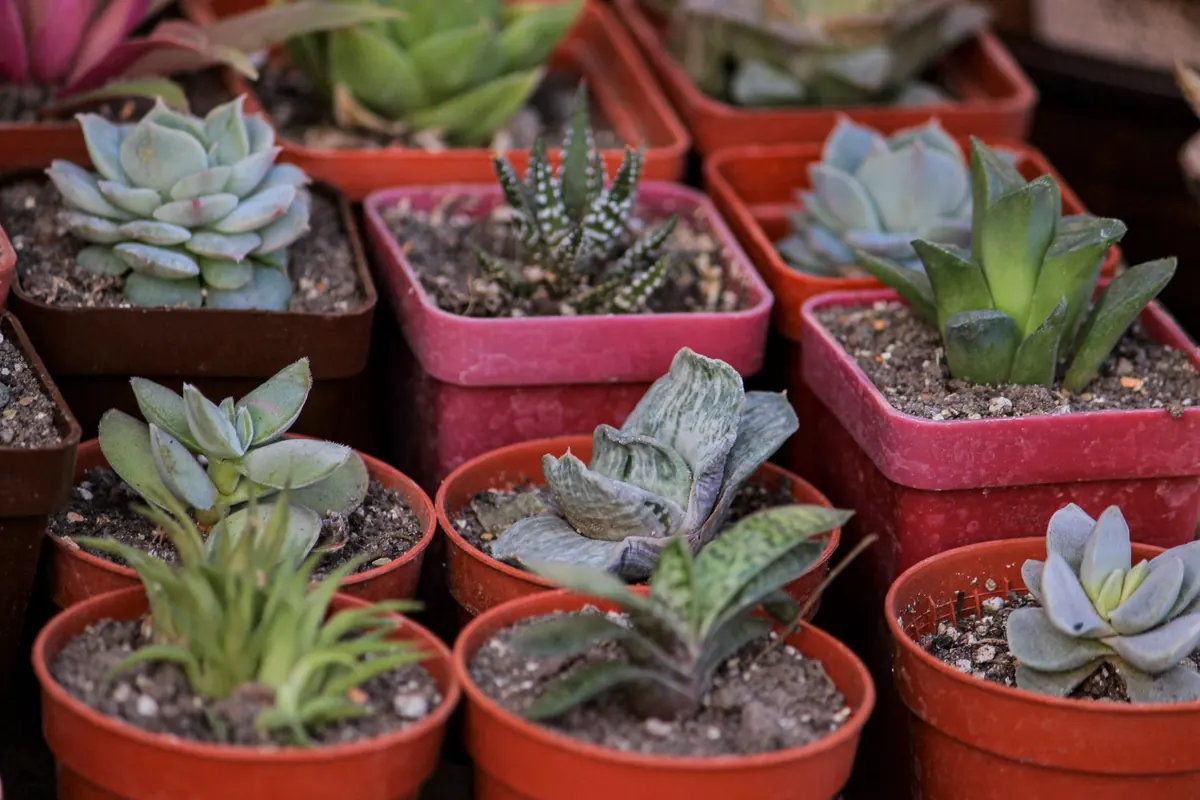
- Living primrose pot. A terracotta pot of primroses with moss pressed on top. No cutting, no water changes; just water when the compost feels dry and deadhead each week.
Conditioning: fifteen minutes that doubles vase life
Most disappointing displays fail on preparation rather than on the flowers themselves. Work through these before anything goes near the desk.
- Strip every leaf that would sit below the waterline. Rotting foliage is what makes water cloudy and smell.
- Cut each stem on a sharp angle with clean secateurs or a knife, never scissors, which crush the stem.
- Condition narcissi on their own for a few hours in cool water. Their sap shortens the life of other flowers, so give them their own jar before mixing.
- Refresh water every other day and re-cut the stems by a centimetre. This matters more than flower food, though a sachet helps if you have one.
- Keep everything out of direct sun and away from radiators, monitors and vents. Warmth opens flowers fast and finishes them fast.
- For hellebores, either float the heads or sear the stem ends in hot water for a few seconds before arranging.
Where to find British blooms in spring
Farm shops, farmers' markets and local florists are the most reliable sources, and many now label which stems were grown in this country. Cut-your-own flower farms open from late spring, and garden centres sell potted narcissi, hyacinths and primroses that will last longer on a desk than any cut bunch. If you plan ahead, plant bulbs in pots in autumn and bring them inside as they come into flower. What you cannot do is pick them from a hedgerow: wild fritillaries and bluebells are protected, and the flowers last better from a bucket anyway.
Desk practicalities
Water and wood do not mix, so stand terracotta and unglazed pots on a saucer or an old coaster. Check glass vases for hairline cracks before you fill them, and keep anything holding more than a cupful of water well away from keyboards, notebooks and cable runs. One spill will cost you more than the flowers did.
Scent behaves differently at arm's length. A single hyacinth or a few wallflowers are lovely beside a keyboard; two hyacinths in a small room is a lot to sit with for eight hours. If you knock pollen from narcissi or anemones onto pale fabric, shake it off outdoors rather than rubbing it in. And rotate your arrangement a quarter turn each morning so the same side isn't always facing the window.
A five-minute Friday refresh
Give the desk display a weekly reset rather than waiting for it to tire. Empty the vase, rinse it properly, re-cut every stem, refill with fresh water and remove anything past its best. Add one new stem from the shop if the arrangement has thinned out. Keep a small box in a drawer with secateurs, twine, a couple of spare jars and a cloth, and the whole job takes less time than making a cup of tea. Start with a single bunch this weekend and let the desk follow the season from there.
Photo: Büşra Nur Bardakçı / Pexels

How to Organise Cables and Chargers Without Hiding Your Desk Decor
Cable management that keeps chargers tidy without emptying your desk: simple routes, clips, trays and...

The Beginner's Guide to Fountain Pens and Desk Ink Storage
A practical introduction to fountain pens for the home office, from nibs and filling to cleaning, plus...
About Us